

Parkville's Premier Paver Patio Installation Experts

When homeowners look for patio paver installation in Parkville, the conversation always circles back to one thing: the trees.
Parkville’s older neighborhoods—Loch Raven Village, Carney, Cub Hill, and those tucked-off side streets near the beltway—are full of mature oaks, maples, and evergreens that have been growing for decades. They offer great shade and character, but they also shape how an outdoor paver patio needs to be designed, prepped, and built if you want it to last.
This isn’t wide-open, fresh-graded development land. Parkville’s soil stays damp longer under shade, roots shift and swell under the surface, and backyards tend to be smaller and tighter. That’s why choosing the right patio paver contractors here matters more than most people realize.
Parkville’s Tree-Covered Neighborhoods & What That Means for Patios
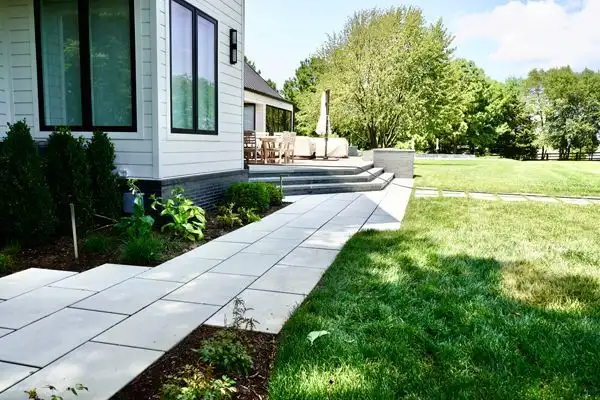
If you live anywhere near Loch Raven Village, Carney, or Cub Hill, you already know how heavy the canopy gets. The mix of big roots, leaf debris, and shaded soil creates conditions you don’t see everywhere else in Baltimore County.
In sunny, open neighborhoods, a standard base prep is usually fine. But in Parkville, the shade keeps the ground damp for longer, the roots grow closer to the surface, and old homes often sit on compact lots where space is tight.
All of this affects how patio paver installation in Parkville needs to be approached—especially if you want a patio that won’t shift, tilt, or heave as the trees continue to grow.
Working Around Big Roots Without Damaging the Tree or the Patio
One of the biggest concerns homeowners have when searching for patio paver installers near me is whether the work will harm their trees. Good question—and the answer depends entirely on how careful the contractor is.
We don’t cut through major structural roots. Instead, we use a mix of root-safe excavation and bridging techniques.
That includes:
• Shallow-grade excavation where root clusters are dense
• Base adjustments that avoid high-impact digging
• Bridging layers that distribute weight across roots without suffocating them
• Edge restraints designed to flex slightly, not crack under pressure
Tree roots don’t grow in straight lines—they wind, rise, and spread. Building an outdoor paver patio around them requires a contractor who knows how to read the ground before ever touching a shovel.
Designing for Smaller, Tight Backyards in Parkville
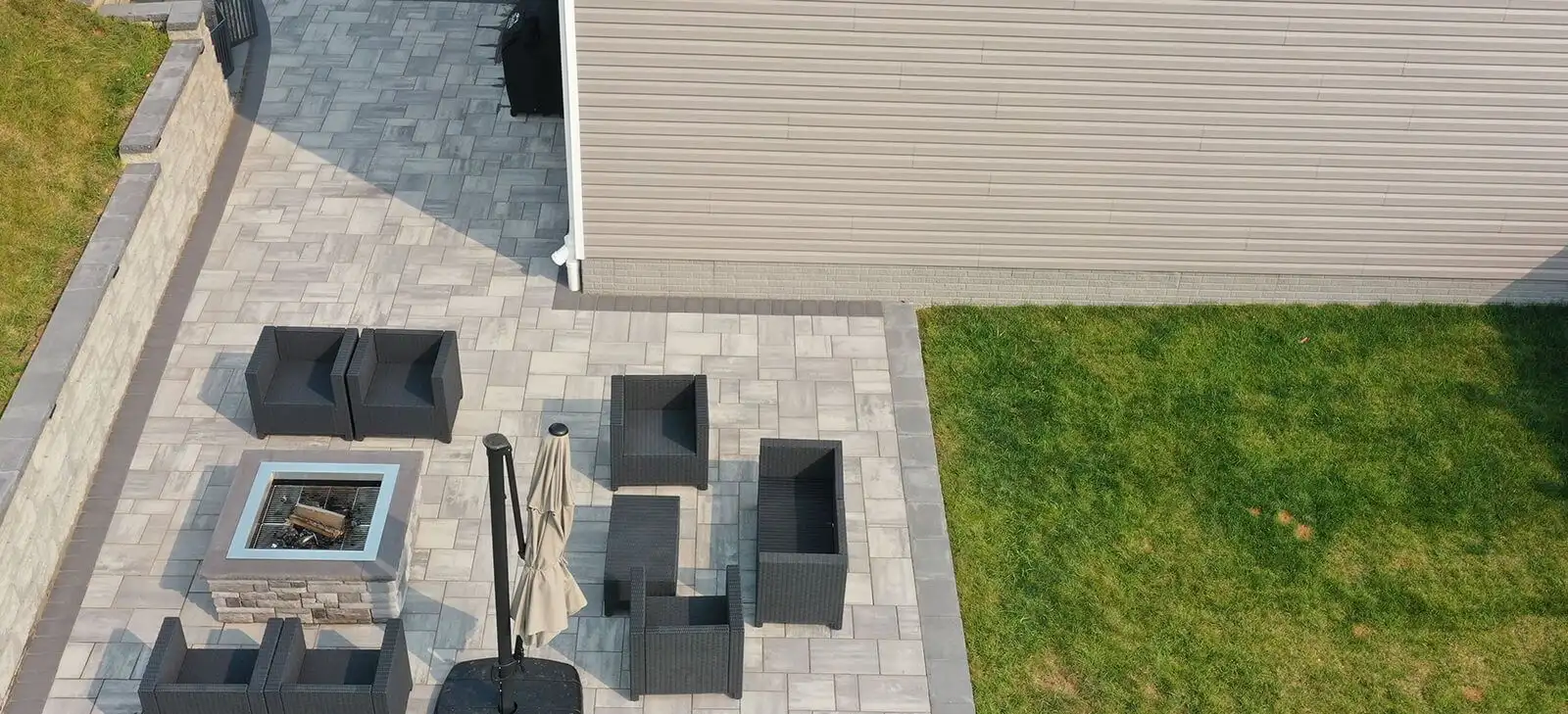
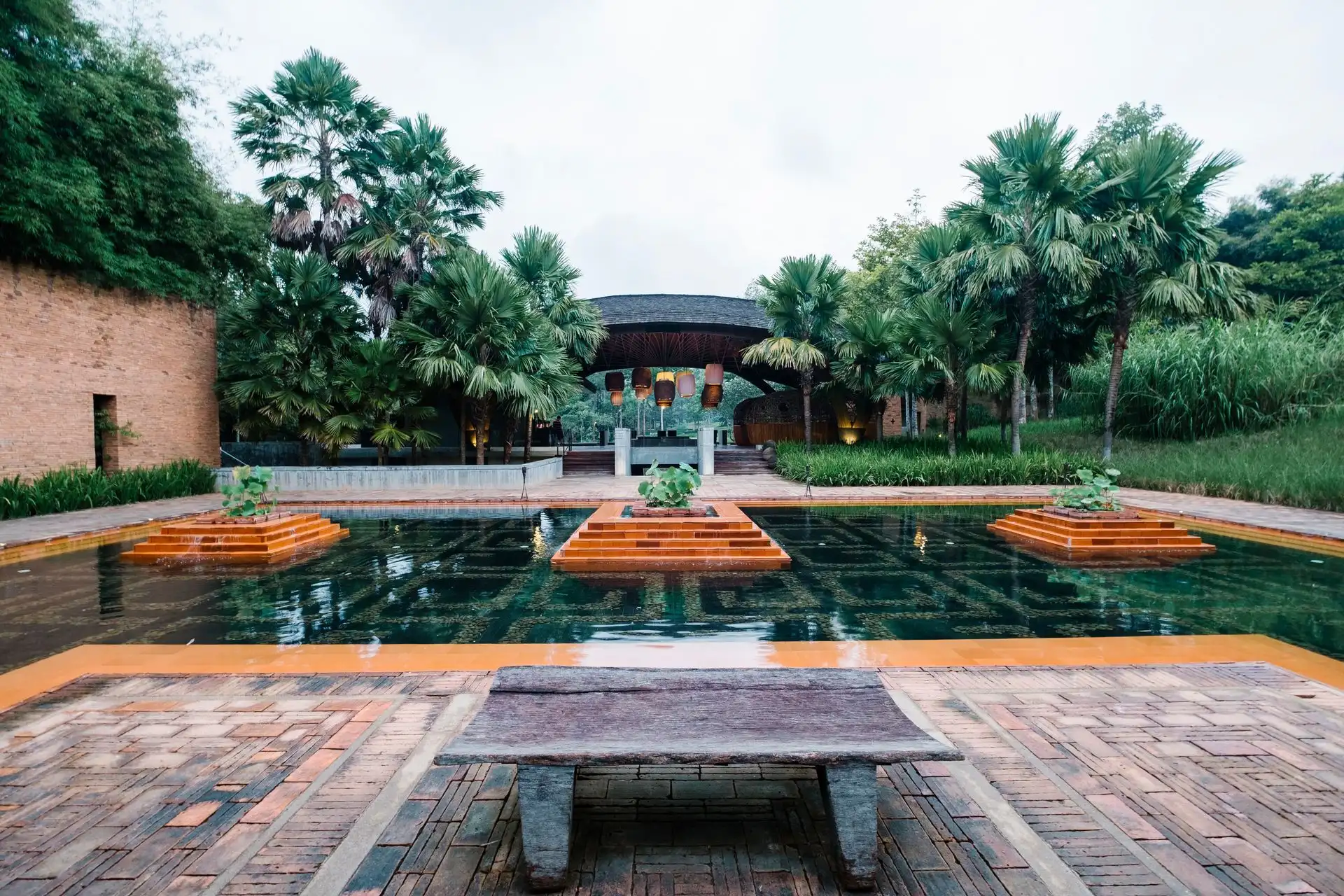
Much of Parkville’s housing stock dates back to post-war builds—homes designed with practicality, not sprawling backyards. That means paver patio design has to make the most of every square foot.
We focus on:
• Clean shapes that tuck neatly into narrow backyards
• Pathways that hug fences or side yards without crowding
• Compact entertainment zones that still feel open
• Multi-use layouts, like a grilling pad that doubles as a small sitting area
Because these lots are tighter, every inch matters. A good layout feels natural, not forced—something only experienced paver patio builders can pull off consistently in Parkville-style yard dimensions.
How We Keep Patios From Heaving in Shaded, Damp Soil
Shade might feel great in the summer, but for patios, it creates two ongoing challenges: slow drying times and root pressure.
Without the right prep, these are the reasons patios in tree-heavy neighborhoods crack or rise over time.
To prevent that, we use:
• Drainage mats under the base to keep moisture moving
• Extra compaction stages that lock the foundation in place
• Breathable joint materials that let the surface drain instead of pooling
• Selective grading that directs water away from the shady zones where it would otherwise sit
This is why it’s important to hire patio paving experts in Parkville—at M.E.V. Outdoor Solutions LLC, we know how the combination of root growth and damp soil will affect a patio five, ten, even fifteen years from now.
Practical Patio Layouts That Fit Parkville Lifestyles
Parkville homeowners tend to want spaces that are easy to maintain and don’t fight against the natural shade of their yards.
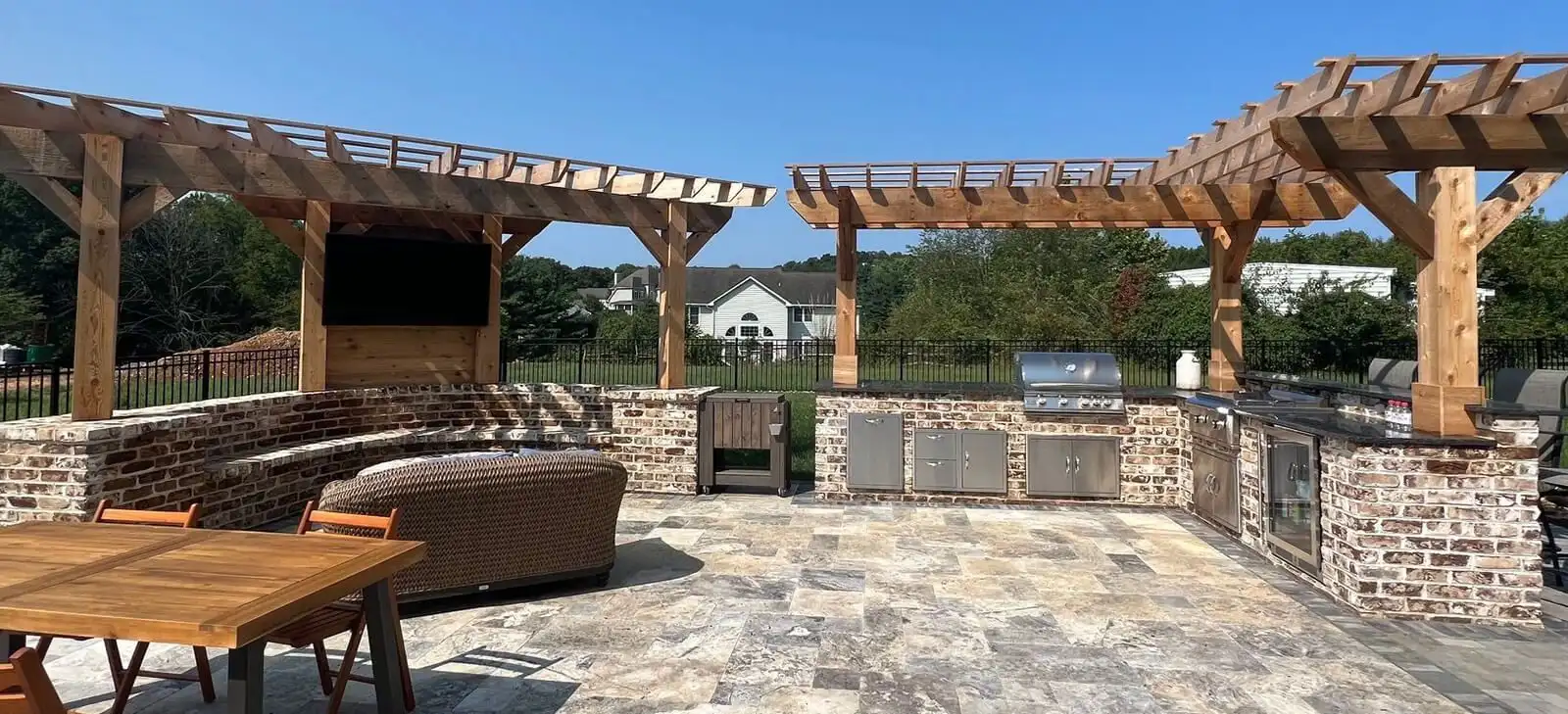
Some of the most popular designs include:
• A grilling pad off the back door
• A small dining zone with edging that stops root intrusion
• Patios with built-in storage blocks for tools, cushions, or kids’ gear
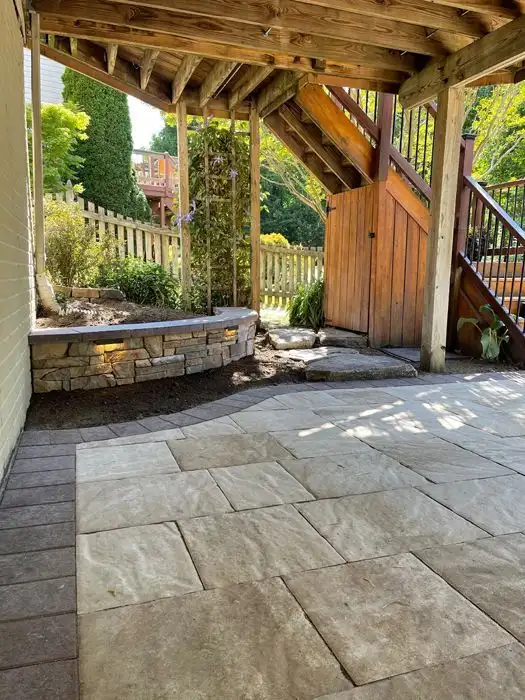
• Curved layouts that blend better with the natural tree lines
Heavy shade can actually be a benefit—cooler seating, less sun fading, and more comfort during the summer. The key is choosing a design that works with the yard’s natural flow instead of forcing something oversized into a compact space.
Why Parkville Homeowners Appreciate Honest, Careful Work
In Parkville, homeowners don’t want flash—they want someone who will respect their property, work carefully around their landscaping, and finish the job right the first time.
We’re used to:
• Navigating narrow side gates and tight fences
• Preserving mature trees and shrubs
• Working around sheds, swing sets, and older yard layouts
• Keeping backyard access clean and organized during installation
It’s the kind of work that doesn’t call attention to itself—but homeowners notice it right away. When you’re searching for patio paver installation near me, you want a team that understands Parkville’s quirks and builds with long-term durability in mind.
Let’s Make Your Shady Yard Work for You
If you’re ready to turn your shaded, tree-filled backyard into a comfortable, long-lasting outdoor space, we’re here to help.
We know Parkville’s ground.
We know the trees.
And we build patios that hold up beautifully in the exact conditions you live with every day.
Reach out today for a quote and let’s get your project started.
FAQs: Parkville’s Tree Roots, Shade & Small Yard Challenges
Will my trees be damaged during installation?
No — we use root-safe excavation and avoid cutting major roots. We build around the tree’s natural structure.
Why do patios shift more in shaded Parkville yards?
Shade slows drying, and damp soil plus root pressure can cause movement unless the base is prepared correctly.
Can you build a patio in a very small backyard?
Yes. Parkville’s compact lots are common, and we design layouts that feel open without overcrowding the space.
Do leaves and debris affect an outdoor paver patio?
They can, which is why we design patios with proper slope, breathable joints, and easy-clean surface patterns.
What’s the best type of paver for shady, root-heavy yards?
The ideal type of pavers are dense concrete ones with strong edge constraints. They operate best when they are on top of a solid, well-compacted base.